
The Claims Genomics Company
Every claim
has DNA.
We read it.
A claim carries two strands — the care that was given and the claim that was billed. We read both and resolve them into one number every side can defend — so the dollar stays in care.

care strand × claims strand
episodes · plans · codes — read together
Chapter 01 — The fight
Two strands, pulled apart for fifty years.
01 The push and the pull
Providers push. Payers pull.
Patients and employers pay for the fight.
Every other vendor arms one side. We sit in the middle — sequence the evidence, argue both sides against ourselves, and land on the number that survives. That's what an objective broker is.

The provider's case
pushes toward billed →
"The chart supports every line. The care was real, documented, and medically necessary. Pay it."
Built by CCPRA — the Provider Advocate. The strongest case the evidence supports. Confidence: 0.91.
Where the strands cross
cited · final · fair
Cited to the contract, the code, the regulation, and the chart. A human signs it. And the patient behind claim SAMPLE-0001 never sees the fight — their care was never the question.

The payer's case
← pulls toward zero
"This claim lacks documentation. The pattern looks like up-coding. Why would I pay full?"
Built by CCPVA — the Payer Defender. Finds every legitimate reason not to pay. Confidence: 0.62.
A self-insured plan, read
a year · illustrative arithmetic · try your own numbers →

Who pays for the fight
If you self-insure, the fight is on your bill.
About six in ten workers※KFF Employer Health Benefits Survey, 2024 · self-funded plans with job-based coverage are in a self-funded plan. Their employer pays every claim, and every round of the fight in between. CuraClaims reads every claim the plan pays, from both sides, and protects your employees along the way.
- Every claim, every week. Not a sample every few years.
- Employees' wrong bills and denials, fixed too.
- No carrier change. A free screening in about two weeks.
Chapter 02 — The payoff
Why any of this matters.
02 The point of it all
From compliance
to care.
When integrity is real-time, gaming stops paying — and the dollar stays in care instead of the fight. The provider gets paid for the care they gave. The payer pays for the care that happened. The patient never sees the battle. Integrity stops being a police function and becomes the thing that keeps coverage affordable and doors open.
And when payment and outcomes finally share one record — the care strand and the claims strand, bound — value-based care stops being a pilot program and becomes how the system runs.
Integrity goes real-time
Every claim sequenced in 19µs※enterprise pre-payment engine · production telemetry — before the dollar moves, not eighteen months after.
Gaming stops paying
When the genome sees every pattern, exploiting the rules stops being a business model.
The dollar stays in care
Money that burned in audits, appeals, and abrasion returns to the bedside.
Value-based care gets real
One defensible record of care and cost — the substrate VBC has been waiting for.
03 Proven where the money moves
in annual medical claims — the only operator running payer and provider in production simultaneously.
Chapter 03 — The people
The humans who sign their names to it.
04 The bench behind the genome
Operators, physicians,
and public stewards.
People who have run the largest payer in America, the largest state health agency, and military health operations — now building the referee. Full bios →
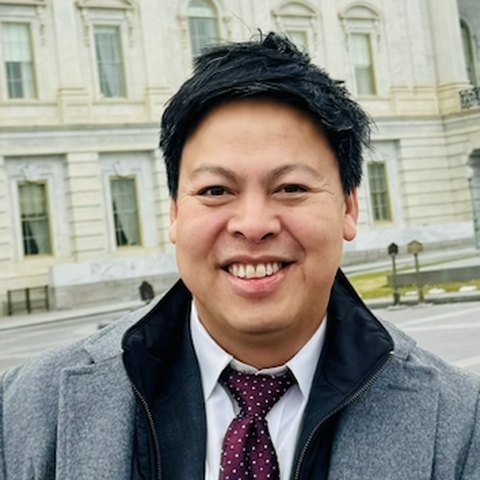
Long Nguyen
Co-founder · CEO

C. Rockefeller
Co-founder · capital

Dr. S. Mukherjee
Co-founder · physician-scientist
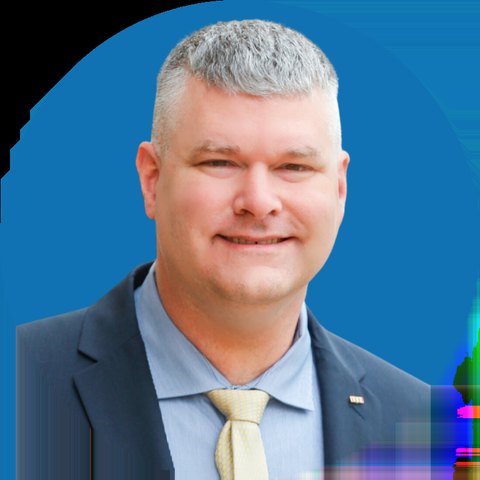
Wallace Smith
Colonel (ret.), U.S. Army

Sam Pham
VP, Engineering

Cesar Gonzalez
DevOps & security
Chapter 04 — Your door
The truth of a claim doesn't change by audience.
05 Pick your side — the truth doesn't change
One genome.
Four doors.
Sequence your book
Bring your 837s and 835s.
We'll show you the DNA.
The signature engagement: two weeks, your 837s + 835s in, the sequencing read out — the recoverable pool by path, every number with its provenance.